

Clippings #7: Summer Recommendations
a letter to immigrant daughters, recent books, and HMRC cops

Hello! I’ve returned from my annual sojourn to Turkey to find ol’ Blighty is hotter than the Mediterranean. People are panic buying air cons and no one is getting any sleep.
Welcome again to my roundup of things consumed over the past few weeks. Book three is underway and my brain is nothing more than a few limp neurons at this stage, so the below recs have been keeping me semi-sane.
Mothers and daughters
Firstborn Immigrant Daughter by Taiye Selasi in The New Yorker hit me hard in my dutiful gut.
Selasi opens with distinguishing between a firstborn daughter and a firstborn child; sons, in whatever order they arrive, are a different matter entirely. The firstborn immigrant daughter, she argues, occupies a singular position because ‘you are the first human being your mother ever met over whom she felt complete and uncontested dominion. You are the first thing your mother could own.’
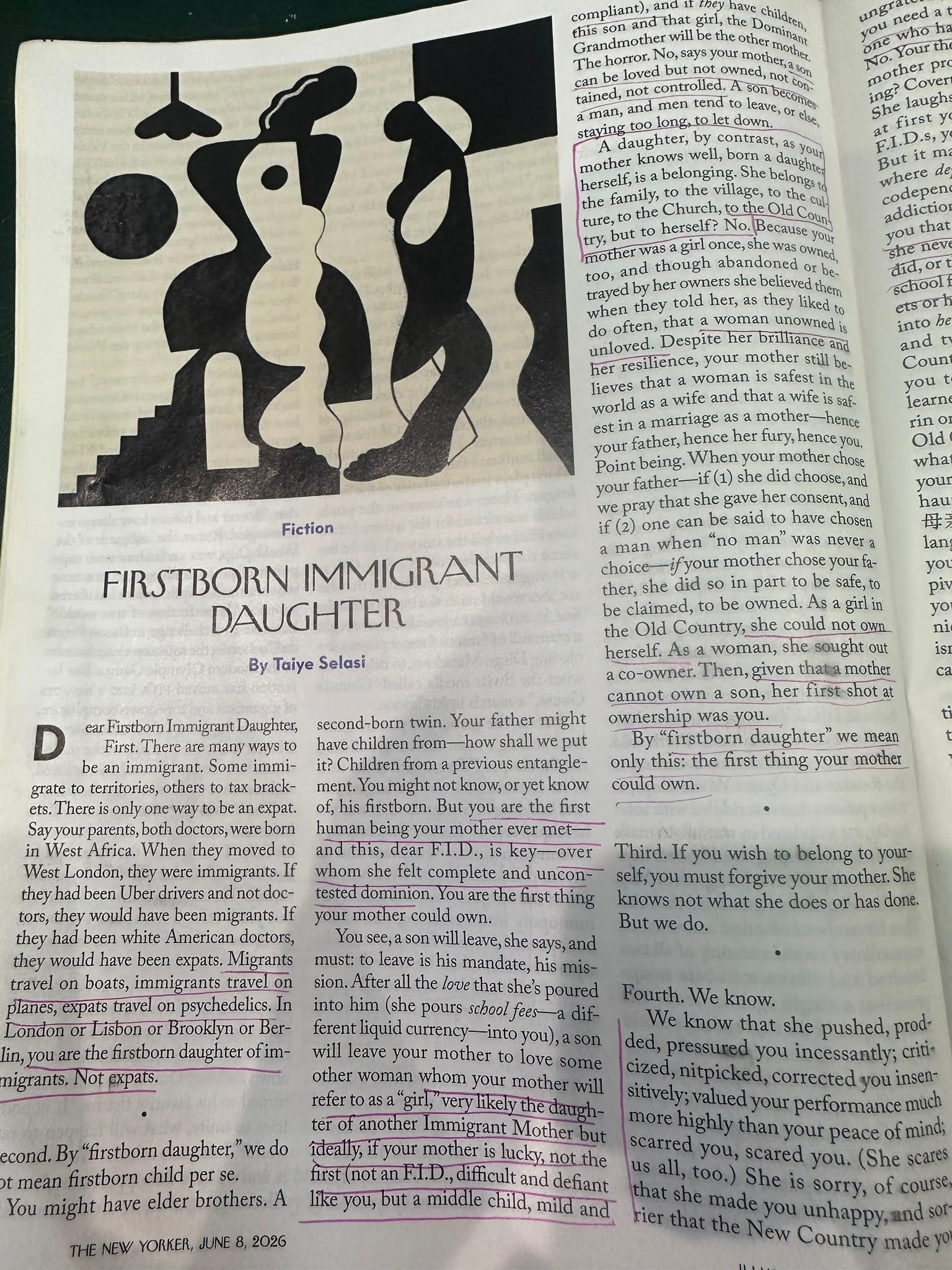
She’s exact on the thorny relationship between mothers and firstborn daughters, as the former reminds the latter that ‘she never had the schooling you did… no one poured school fees or study abroad plane tickets or holidays into her.’ Mothers of this ilk are in a circular position: they both facilitate the upward mobility of their daughters, and in turn take on the role of a creditor, loans repaid in obedience and gratitude. The logic is internally coherent: ‘If you love her then you will obey her, and if you obey her then she will love you. See? Simple. She can’t understand why you can’t understand.’
It’s something that features prominently in both my books. An irreconcilable tension between a mother from, what Selasi calls the ‘Old Country’ and a daughter living in the ‘New Country’, and how those tensions play out across relationships, lifestyle, career choices and so on. When writing both Jaded and Minbak, I found it impossible to write about my protagonists - young immigrant women - without featuring their mothers. In Minbak, it’s the very reason Youngja as a character exists; without her, Hana lacked clarity; without Hana, Ada was two-dimensional.
I leave you with the line that winded me, as a qualified lawyer who only quit practising once she had a book deal: a first immigrant daughter ‘may become a poet, but she must become a corporate lawyer first.’
Ooof.
Born into it
This article on The Rise of the Literary Nepo Baby came out over a month ago but I keep returning to it. Nepo-anything has become a byword for suspicion, suggesting leg-ups and unearned entry into industries - film, TV, publishing - that are notoriously difficult to penetrate.
The article is quite gentle. Neither a puff piece nor a take down, as though access to these writers and their offspring was not something to squander by making uncomfortable implications. So said implications are largely left for us to ponder. I also noticed a new language of nepo-quasi-acknowledgement: each baby noted the benefits of having a celebrated author as a parent, while still framing their success as independently arrived at. For example, Patrick Charnley talks about submitting his manuscript under a pseudonym….but with his mother’s agent and to a publisher known to him. So how much work did the pseudonym do? On the flip side, I was impressed with Deborah Moggach’s candour in saying that when she started out, her father knew the literary editor of the Telegraph and she got to see her name in print early - it’s no small thing to say out loud.
I’ve written previously about the rampant cynicism in the publishing world, and I don’t doubt that it would be difficult to start your career under that cloud. But I also think that the advantages are a bit more significant that the article suggests. It’s not just ‘confidence’ and ‘growing up around books’; it’s an intuitive understanding of a world that is genuinely opaque to most. That knowledge isn’t neutral, and it compounds over the years.
Lost and found
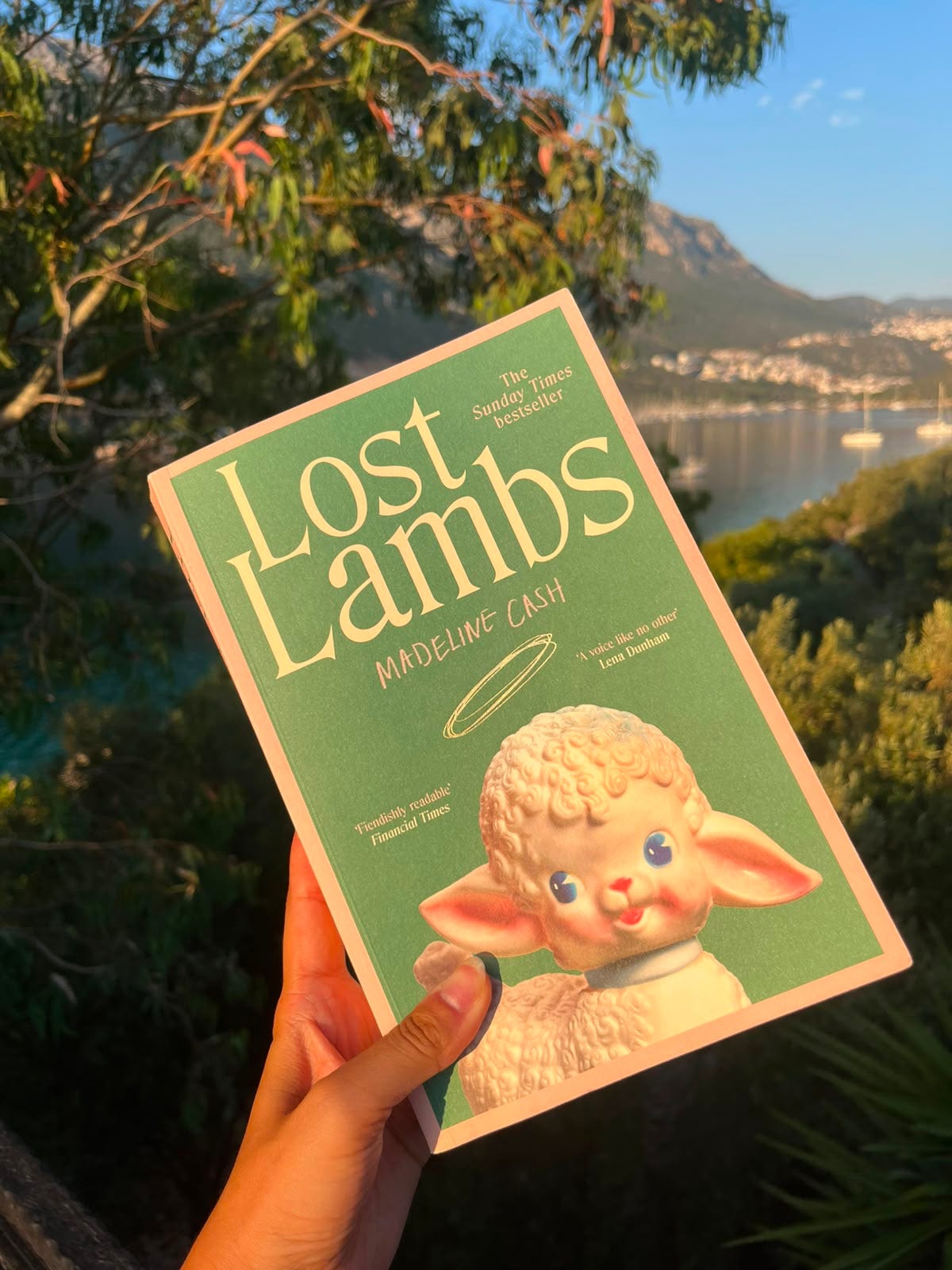
Okay, I finally read Lost Lambs. I’d put it off because there was so much chatter around its publication that the book itself felt beside the point. The novel follows the Flynn family: parents Catherine and Bud who have opened up their marriage, and their three daughters, Harper, Louise and Abigail.
It is very, very funny. It’s cracked and dirtbaggy and unhinged in a way that sustains itself and doesn’t tire quickly. Personally, I feel like the characters alone could have carried the book without the conspiracy plot line, but even that was highly entertaining.
What lingers though is the conversation the book has detonated, specifically about literary-it-girlhood. Something about Lost Lambs seems to have gone to the heart of a lifestyle that canonises the likes of Ottessa Moshfegh, Elif Batuman and now, Madeline Cash. The unravelling yet aspirationally droll female character is the archetype of this community and Cash offers them four for the price of one - three daughters falling apart in different, uncontrollable ways, and a mother who may or may not be fucking the neighbour.
What I find myself turning over is a bit chicken or egg: did the book trigger that conversation, or did the conversation manufacture the book’s significance? At this point, I doubt it even matters.
Soft Ann
I have a curious relationship with Ann Patchett. Which is to say, I’m not over Bel Canto. It is one of my favourite books and I re-read it periodically whenever I yearn for writing that just does ‘It’ for me. It is a devastating portrait of love blooming in captivity, and the coming together of people however improbably.
That masterpiece (a term I use with reluctance) however, has made everything that comes after difficult to hold. In truth, I’ve found Patchett’s subsequent books to have turned….softer? In Tom Lake and The Dutch House, she retains her lucid, precise prose and wields simplicity with great skill. She has a particular gift for time, and her novels often centre around a single event that ripples forwards across decades, going unnoticed until the damaged is complete. But the stakes are quieter, calmer. Unlike the hostage crisis depicted in Bel Canto, recent books have been of a much gentler introspection.
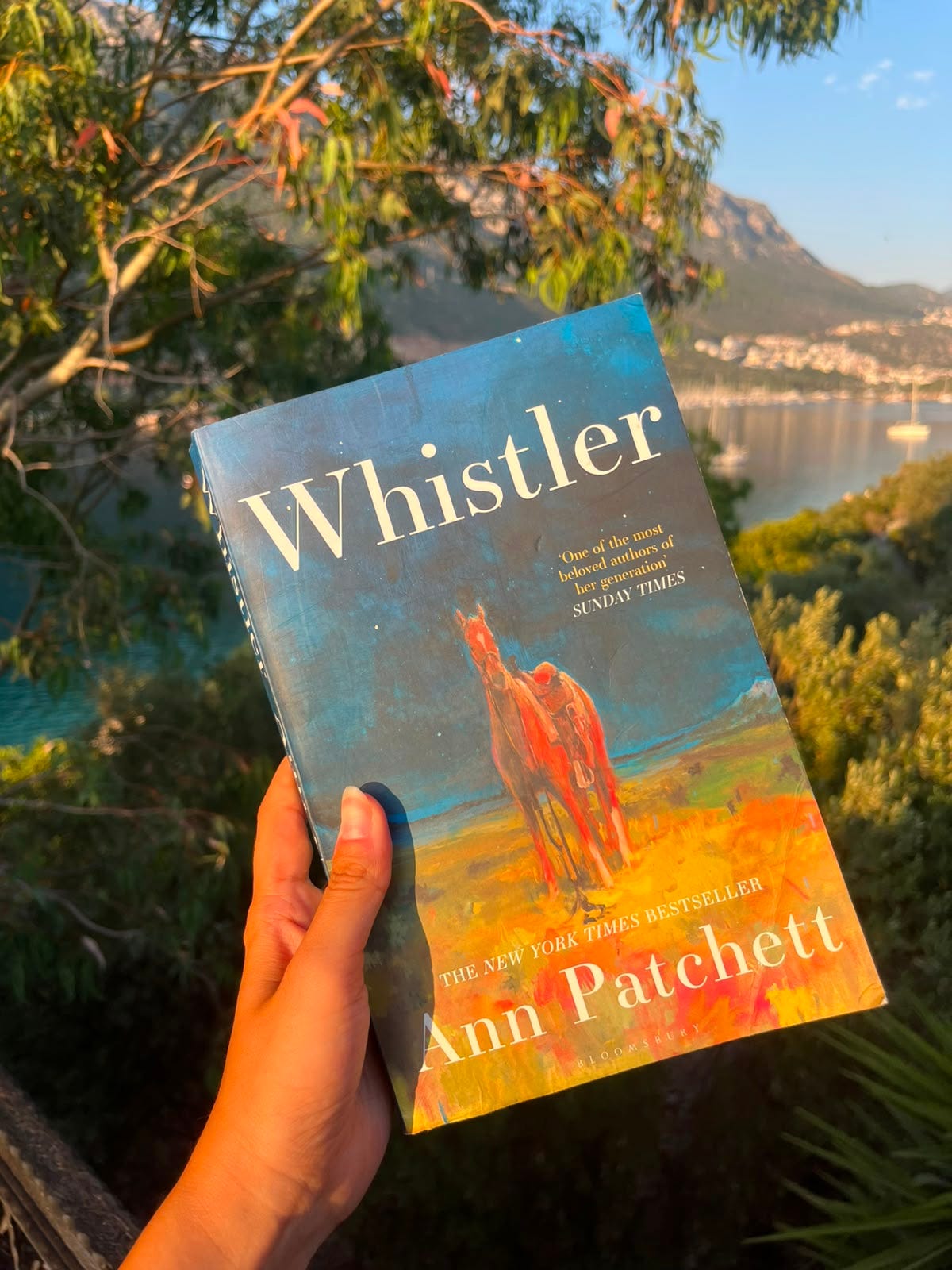
In her latest book Whistler, that single, catalysing event is a car crash. A recurring theme in Patchett’s books is that of chosen family, and in this new novel, that family is ex-stepfather and his ex-stepdaughter. Eddie and Daphne’s mother divorced after the car crash, and, after 44 years apart, Daphne runs into Eddie at the Met. What follows is the rediscovery of their love that was never quite named the first time around. I enjoyed it a lot, but found myself chasing the high of Bel Canto, yearning for the same emotional payoff. For me, that unmatched bar is akin to McEwan’s Atonement.
All that aside, Ann - call I call you Ann? - would definitely be a hypothetical dinner party guest. This piece in the NYT - Ann Patchett Wrote Her Latest Novel While Walking on a Treadmill Desk - made me smile from ear to ear. She extolls the virtues of her NordicTrack Treadmill Desk, and is a fan of Logitech ergonomic keyboards. Ann Patchett, the fitness-apparatus influencer. Iconic.
On Grief
No other influencer makes me feel as protective over them as Emilie Kiser. I’d like to think I’m quite immune to parasocial relationships, but even before tragedy struck her family, I watched Emilie’s daily videos during my peak depression days. Her content was ordinary and unremarkable which is precisely what made them soothing, depicting the kind of days where the bar for getting through them is low.
For those who don’t know, last year, Emilie’s three-year-old son Trigg drowned in their pool, when her younger son was only five weeks old. The media onslaught that turned a private loss into a public circus, I can’t begin to imagine what that does to a person.
Last week, Emilie gave her first interview with Jay Shetty. What struck me was the clear-eyed way in which she spoke on the permanency of grief, how it intertwines with joy and guilt. Particularly, she addresses her marriage, since it was her husband who was watching their children when the accident happened, and I found her take on empathy, blame and forgiveness, and what it takes to hold a relationship together after such a loss, particularly moving.
Meanwhile, on screen
I’ve had Legends on Netflix favourited since it came out and I’ve finally got round to watching it. It’s what I love about British television: gripping, droll, gravelly and delightfully ragtag.
It’s an undercover cop story about HMRC’s own war on the UK’s heroin epidemic in the 90s. Steve Coogan plays a seasoned operative tasked with recruiting ordinary customs officers to go undercover and infiltrate drug gangs. It’s true crime but with an off-beat quality to it, oddly warm, the opposite of second-screen watching
Diego Luna has had my heart since Dirty Dancing Two: Havana Nights (IFYKYK) so it’s messed with me a little to see him as drug kingpin Miguel Ángel Félix Gallardo in Narcos: Mexico. Where did that cutie twinkle toes go? My own heartsoreness aside, he plays a compelling villain, and for a fully subtitled show, I was gripped by the origin story of the Guadalajara cartel. It’s epic in scale, tightly focussed and tense.
Random clippings:
Tensions in my home are raging ever since Australia won against Turkey in the World Cup, leading to Turkey’s dropping out of the (hunger) games. My Australian husband and Turkish father are usually two peas, but the pod is a little battered and bruised.
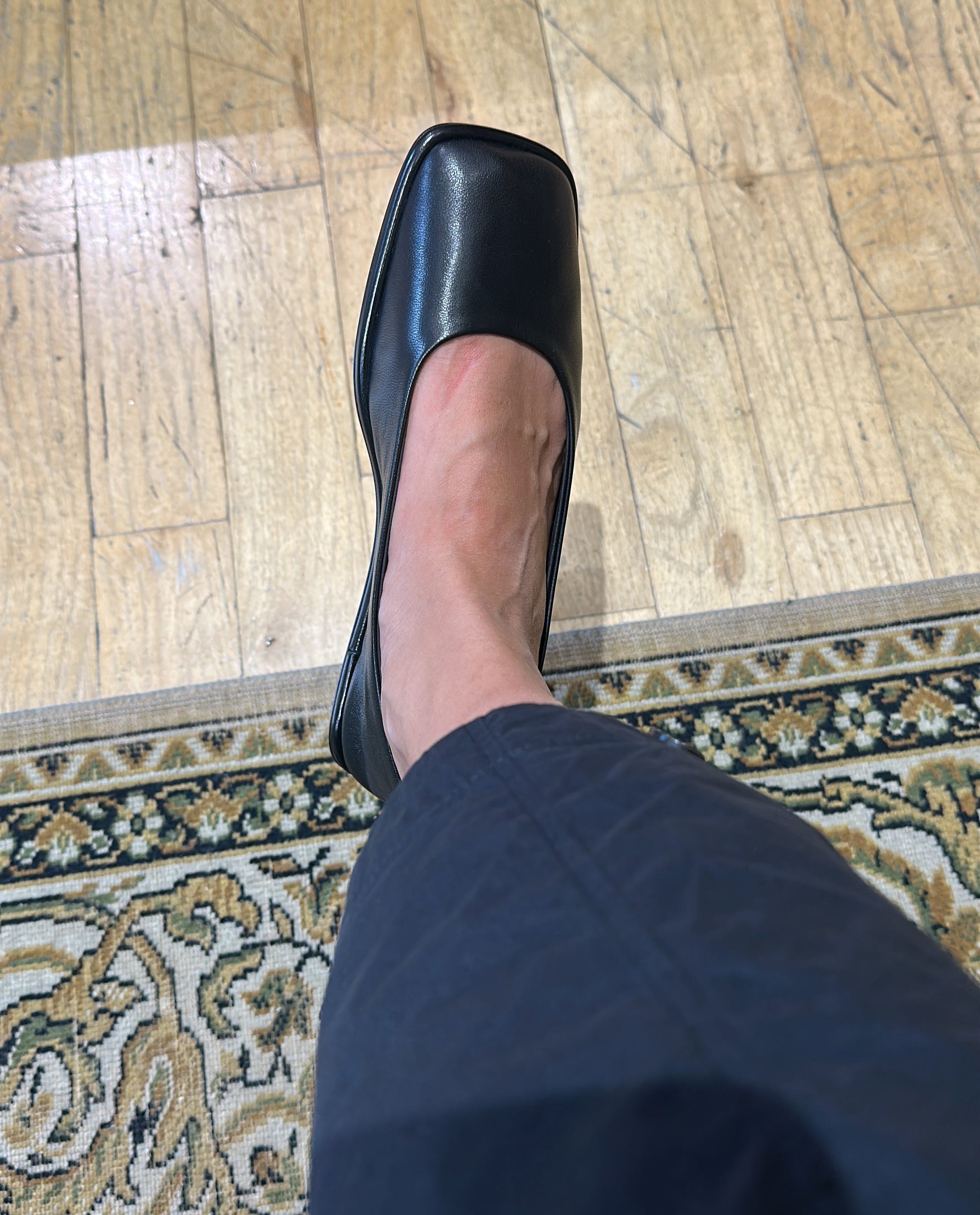
Huge statement: I have found The Perfect Black Ballet Flat. A pair that isn’t too coquette, or whimsy, or seemingly for an actual dance class. They’re the Clover Flat from Officine Creative (pricey but COS flats these days are creeping towards £200 and they’re literally Zara cosplaying luxury?). I love the square toe and the lack of toe cleavage and they are incredibly comfy, though no ballet flats can beat Tabis for sheer comfort/style payoff.
In a funky surprise, Minbak recently hit #1 bestseller on Amazon recently. Not a newspaper charting alas but nice to see my second born (immigrant daughter) still climbing out there in the world.
Next up, subtle flex but I’ve received a proof of Min Jin’s Lee’s American Hagwon and I’m looking forward to reading this week.
See you next time.