

the limits of language
and an identity crisis

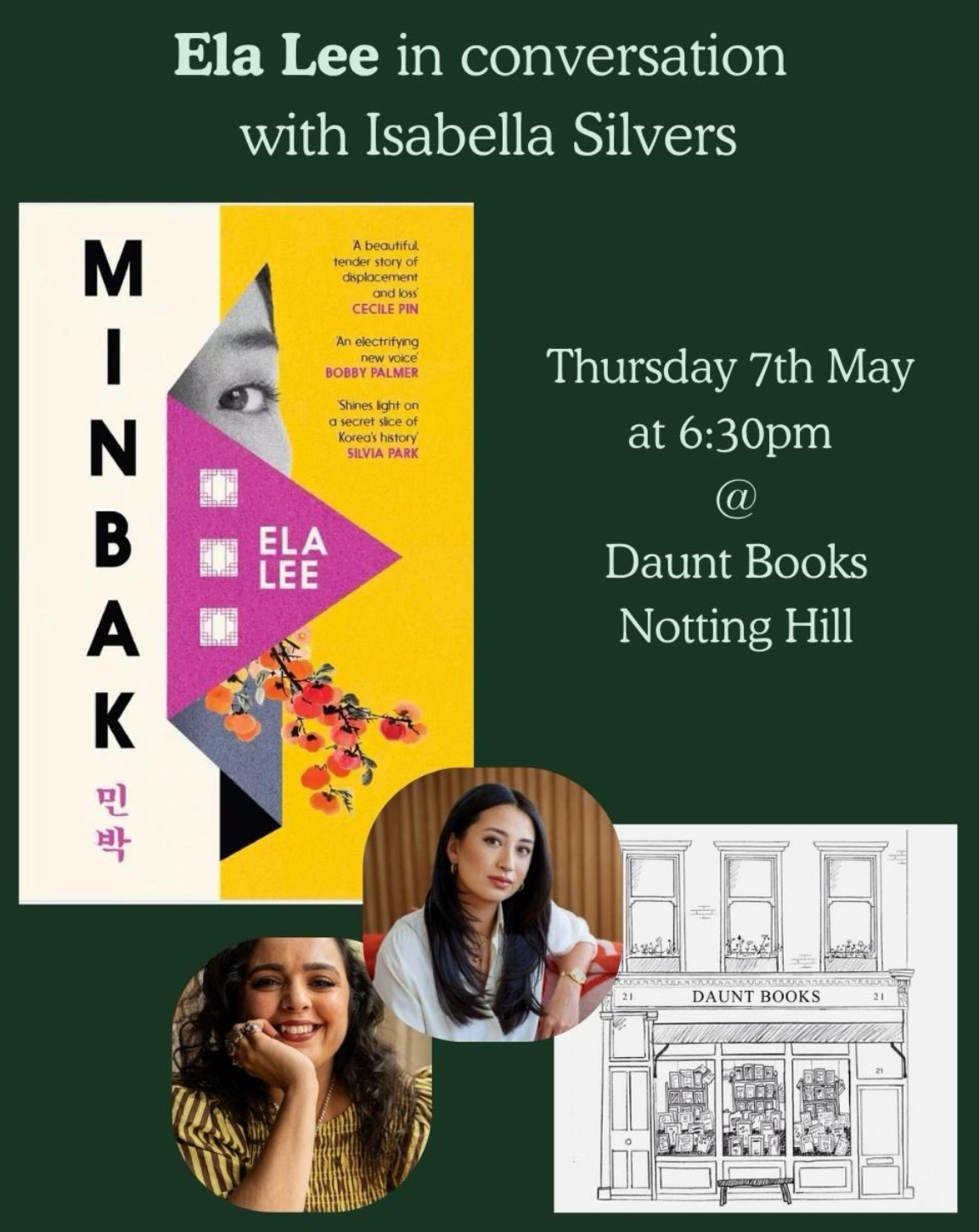
London friends, a quick note before today’s post. I’m speaking to the wonderful Isabella Silvers of Mixed Messages this Thursday 7 May at Daunt Books Notting Hill. I’ve no doubt our conversation will touch on the topics below. You can find tickets and info here.
I was born in July 1995, on a Sunday morning, 8am. I emerged into the world with a heart defect. I was the first grandchild on my dad’s side, who weren’t there. Neither was my mum’s side. Because another salient point is that, though I was born in the UK, I was not a British baby since both my parents were immigrants, away from their families and support networks. It’s a common misconception that Britain has birthright citizenship. I didn’t get a British passport until I was nine years old. My naturalisation papers pithily record me as: ‘Ethnicity: Mixed/Other’.
The circumstances of my birth nationality aside, surely I’ve assimilated into the UK by now? Recently, I spoke with Rachel Johnson on her podcast Difficult Women, and she pounced when I said English was my ‘dominant’ language. When asked why I described it this way, I said that I didn’t really speak English until I started school, so calling it my ‘native’ language or my ‘mother tongue’ doesn’t seem quite right.
She pointed out that I grew up ‘here’. It’s true. I have three tiers of education in England. I’m entrenched in her institutions. I’ve studied her literature and history. Gun to my head, I could recite her kings and queens over perhaps the last five centuries. I’m trained and qualified to practice her laws. I pay taxes to her.
But still, I dream in Korean.
But still, I people watch in Turkish.
When my stomach rumbles, I mentally run through dinner options in Korean, my mother’s instructions like an in-built cassette. Without thinking, I’ll click my tongue ‘no’ to a question like a Turk. I technically speak three languages, but do I really?
My first language is Korean, and I used to say I was fluent. Until I did four field trips to Korea to research my second novel Minbak. The first stage was interviewing professors and activists whose English was excellent. But then, I met birth mothers and members of local support networks, who spoke no English, navigating deeply personal subjects. These conversations required nuance, sensitivity, sad humour, compassion, empathy, were on the other side of an emotional buffer to any conversation I’d had in Korean before. Our discussions traversed Korea’s IMF crisis, decades of military dictatorships, state violence, and foreign policy. Some people I spoke to had very strong Busan accents, or spoke in a more old-fashioned vernacular. Suddenly, I found myself floundering, the limits of my language skills stretched to a new limit.
It triggered a bit of a crisis for me. I’m mixed race, and am viscerally aware that many Koreans don’t view me as one of them. Korea is over 97% monoracial, and the concept of the ‘danil minjok’ is deeply entrenched. It’s the notion that there exists a single ‘pure’ Korean bloodline, historically putting mixed-race Koreans (following the Korean War, which resulted in ‘GI babies’, in particular) into a grey area. Sure, I have a Korean passport and a national identity card (indeed, before I ever had a British passport), but that doesn’t stop passers by on the street assuming I’m a tourist. My whole life, speaking Korean has felt like the strongest nexus to my Koreanness. The only firm pillar I had in the culture. So when I found my abilities faltering during Minbak interviews, it was jarring. This deep discombobulation reminds me of Simone Biles Rising, which follows the GOAT gymnast’s battle with ‘the twisties’ which is when, mid-acrobatic-maneouvre, she lost her sense of space and became dangerously disoriented.
Some of the women I spoke to have lived through profound loss and hardship, silenced by a long history of discrimination against women who fell outside the narrow ideal of motherhood. Their stories have been pushed to the margins and have often been framed in reductionist terms. It mattered that, in Minbak, I wrote towards a fuller, more human portrayal of women who had been labelled as ‘fallen’. But I was mid-air, wondering if I was capable of landing that plane safely.
This essay might not be that relatable: multi-passported woman has an identity crisis. But think about why the multi-million-copy bestseller Crying in H Mart by Michelle Zauner hit such a chord? Following the loss of her mother, the memoir is an exploration of the barriers between two generations who were raised in different languages and cultures. Zauner not only grieves her mother’s passing, but also what she fears is her connection to her Koreanness. It is a question that sits with so many diasporic/second generation people: is my parent the only bridge to this country I come from, that otherwise seems so far away? What happens when they are gone? How will I remain connected to my culture? The dismantling, and tentative rebuilding, of Zauner’s identity was both painfully tender and freeing to read.
As Zauner deftly paints, grasping a language (and therefore an entire culture) is so much more than the spoken word. What about the written word? It’s easier for me to read Turkish because it has the same Latin alphabet as English. As a teenager, I read a translation of Twilight in Turkish, which was quite jokes. I ‘can’ read and write in Korean, but slowly and with great effort. I’ve never read a novel in Korean. There’s five thousand years of Korean literature that is inaccessible to me. I can make my way through a newspaper, but it’s effortful and frustrating. As a writer, being half-illiterate in both languages is a discombobulating feeling.
Then, what about the language that falls between the cracks? Social context, gestures, idioms, swear words, slang, abbreviations, acronyms and so on. They all make up the social fabric of languages. For example, I’d have no idea how sexual politics work in Turkey or Korea: what does flirting or posturing look like? I don’t know how two teenage friends might tease each other (though I’m feeling that way whenever I hear ‘six-seven’ in the UK).
Language is also home to cultural memory, preserving the legacy of regions and their histories. Korea has often been called The Irish of the East because, like Ireland, they have a history of occupation (by the Japanese), revolution, civil war and the ultimate division of the country. Where there has been colonisation and erasure, verbal storytelling becomes a vital source of inheritance and cultural survival.
This feeling of straddling multiple environments, never fully immersed in any, is a theme in both my books. In Jaded, my protagonist Jade has no concrete sense of who she is. On the surface, she is a successful lawyer, dutiful daughter, loved girlfriend. But after she is sexually assaulted, the fault-lines underpinning these pillars are challenged. As her relationships start to break down, she realises that there’s an extent to which, by catering to other people’s perceptions of her, she has been complicit in her own erasure. Similarly, in Minbak, Ada is the lost third generation. She is Wasian, speaks Korean but can’t read it. All the messiness of her mother and grandmother’s stories trickle into her, result in her, but she can’t fully access them. Ostensibly, Ada has the ‘best’ life. She’s growing up in London, with more freedom and opportunity, and the best education. But she’s also the one who’s most disconnected from her family’s past.
Beyond thematics, I think languages have influenced my writing in other ways. When I can’t quite pin down a feeling in English, I can often find what I’m trying to say in Turkish or Korean. When a sentence feels dull or clichéd in English, I think about frequencies and syntax in other languages, and sort of transpose it in. Turkish has a certain nomadic lyricism and superstition baked into it. Korean is quite physical, with many descriptions being onomatopoeic. There’s no way I could write a wholesale novel in either language, but they certainly diversify my word choices, sentence structure and tones. I guess it’s kind of akin to a boxer taking gymnastics classes to help with their flexibility.
For my third novel however, there has been a break in the pattern: there are no mixed-race characters. It is set in Turkey with male Turkish protagonists. As such, my ability to use my own experiences to colour the novel is significantly limited. I can’t relate to Orhan and Murat, the same way I do to Jade and Ada, beyond speaking the same language as them. All of a sudden, the ongoing dialogue about who gets to write which stories come to mind, which I discuss in more depth here. I’m also nervous about writing Turkey in general, given that its two major literary exports, Orhan Pamuk and Elif Shafak have both been prosecuted for ‘insulting Turkishness’ in their novels. Elif Shafak in particular has discussed how preposterous it was that her fictional characters were being cited in court as evidence. I wonder if this departure will dent my credibility because, like Casey of Min Jin Lee’s Free Food for Millionaires, I may be Turkish, but I am not of Turkey. Will my portrayal of early-nineties Turkey be sufficiently rich? Will it feel emotionally authentic? Ultimately, is language alone enough?
Catch up on previous posts here:


