Things Worth Your Time #3
Where are all the male novelists? They're winning the Booker

Hello, welcome to Elaborate. This week, I have stalled. The draft of Book Trois has not progressed beyond a few hundred words. This happens episodically, and with hindsight, I can recognise that periods of stagnancy are good for creativity, but in the midst of it, I punish myself for my idleness. These are the things that have kept me distracted from the (as I describe below) Victorian need for progress.
80% of the last five Booker prizes have been won by men?
Putting masculinity back at the centre of literary fiction - The Guardian
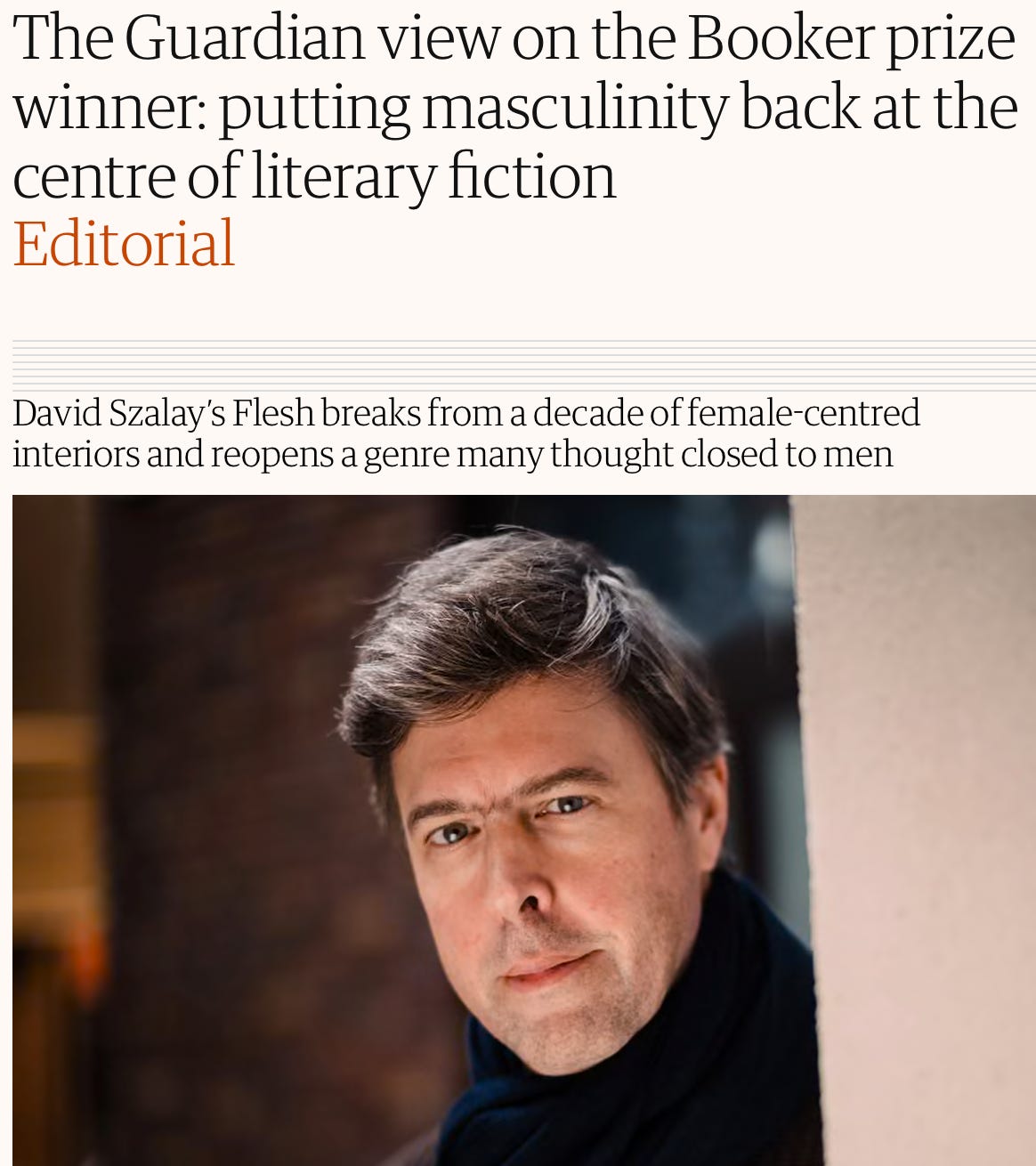
I found this Guardian article on Flesh winning the Booker last week troubling at best, a genteel lean towards the manosphere at worst.
Its opening premise is that:
‘Novels of female interiority have dominated literary fiction for nearly a decade. Writers such as Sally Rooney and Ottessa Moshfegh captured the inner lives of young women in a way that felt almost shockingly fresh and real, and chimed with the #MeToo moment. Similar stories about young men have become hard to find.’
Ahhh MeToo, that passing female moment! Notwithstanding the gender of 97% of perpetrators…
The article frames Flesh’s win as a reclamation of the male experience in literary fiction, which is odd because:
In the past five years, only one woman has won the Booker. An astonishing 80% won by men.
Looking at a bigger sample size, over the past twenty years, 65% of Booker winners have been men.
Other prestigious accolades follow the same trend:
Since its inauguration in 2019, winners of Orwell Prize for Political Fiction have been 57% male.
Over the past 20 years, winners of Ondaatje Prize have been 70% male.
Over 10 awards, winners of the Rathbone Folio Prize have been 60% male.
As I write this, Vogue has published a piece by Eliza Clark responding to the Guardian article, noting how male authors are far from a dying breed, with many young writers like Ocean Vuong and Brandon Taylor experiencing commercial and critical success. This passage is spot on the crux of the issue:
“it feels like whenever one points to a large group of successful and culturally present male novelists, including the type that writes about “masculinity”, the response from people making the “no male novelists” argument boils down to, “No, that one doesn’t count”. Well, who do you want? It feels like the establishment is chasing a 40-year-old white Oxbridge-educated man in literary fiction, and we have had millennia of This Exact Man dominating the sphere. He still exists, he is still very successful – he’s just over 50 now. In fact, he just took home the Booker Prize.”
I’m not saying we shouldn’t read accounts of male vulnerability, far from it. What I do find damaging is the narrative that ‘women’s stories’ are cannibalising space for ‘men’s stories’, and the resultant implication that the former needs to be curbed. If the male experience has been so sidelined as the Guardian suggests, why does it continue to dominate the country’s most prestigious, career-altering literary awards?
The Victorians invented toxic productivity
I awoke at 1/2 past 7 - Aeon - Elena Mary
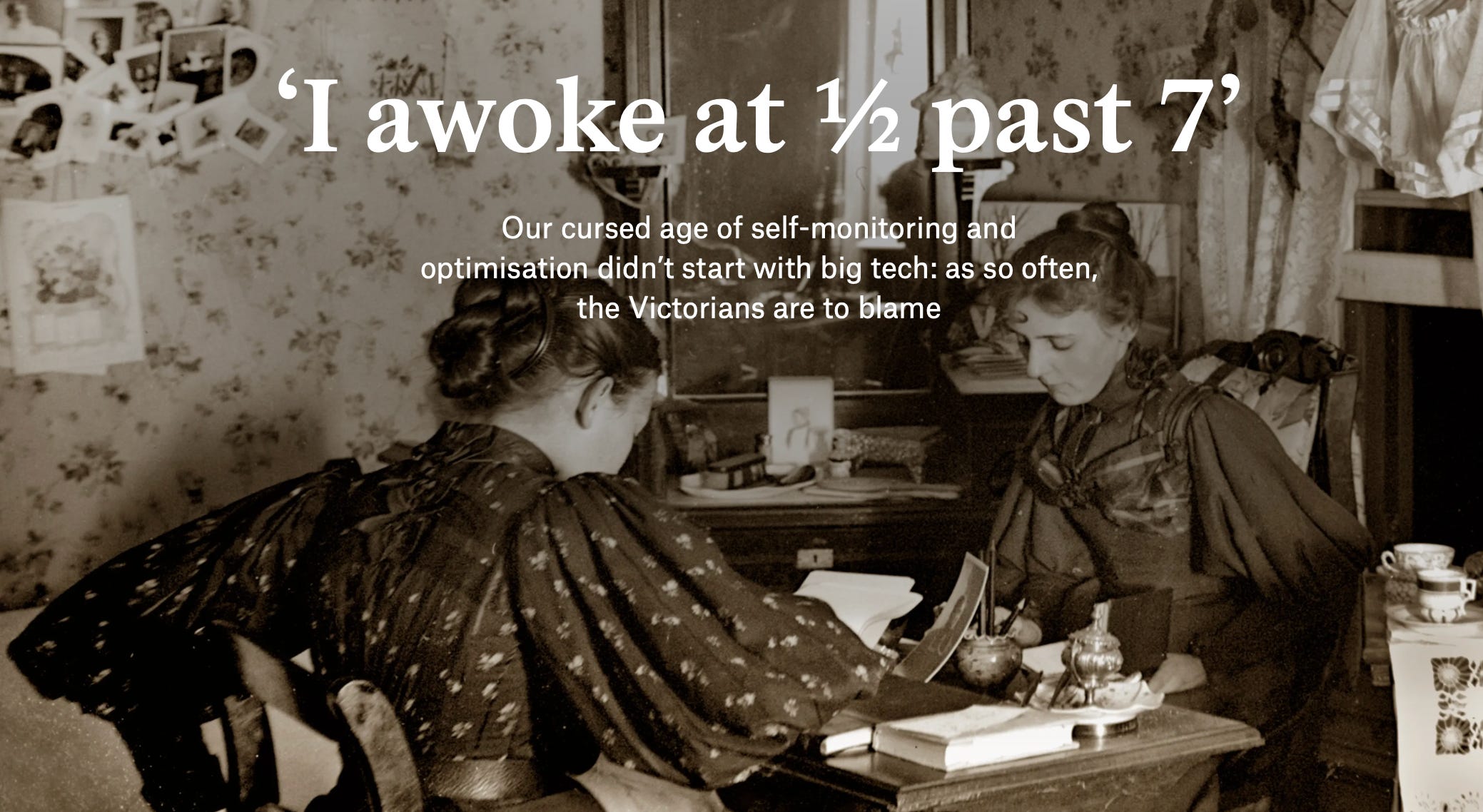
An essay on self-quantification being inherited from the Victorians
10,000 steps, electrolyte water, time-blocking, capsule wardrobe, bio-hacking, performative meditation, habit trackers, wearable technology, we utterly glorify productivity. But, far from a product of late-stage capitalism, Mary traces the culture of self-quantification to the Victorian middle classes.
Victorians were obsessed with progress, social, industrial and personal. They descended on all aspects of life - from poverty to sanitation to science - with a view to improve. “The greatest Victorian sin was idleness.”
Due to the standardisation of time, Victorians were obsessed with routine. An extract of Queen Victoria’s diary:
“I awoke at ½ past 7 and got up at a ¼ past 8. At ½ past 9 we breakfasted. At 1 we lunched … At ½ past 1 came Baroness Howe and Sir Wathen Waller. At a ¼ past 2 we went out walking … till a ¼ to 3. At a ¼ to 6 I played with Mamma till a ¼ past 6 … At 7 we dined. I stayed up till a ¼ to 9.”
What I found fascinating was the way diaries shifted from being purely personal to organisational tools. The invention of printed pocket diaries became popular, with sections for appointments, timetables, and personal goals, came a habit of mapping out the future.
“A printed diary held out the promise of total control over time, place and the self.”
There is a distinctive, simultaneous shift towards self-judgement. Many diarists wrote with pride of the days they rose early, while confessing to feeling a sort of moral failure when they missed entries, reflecting the impulse to hold our real selves against our ideal selves that continues to rage today.
The boyfriend-shame debate continues
Confessions Of An Unapologetic Boyfriend Poster - Vogue - Megan Nolan
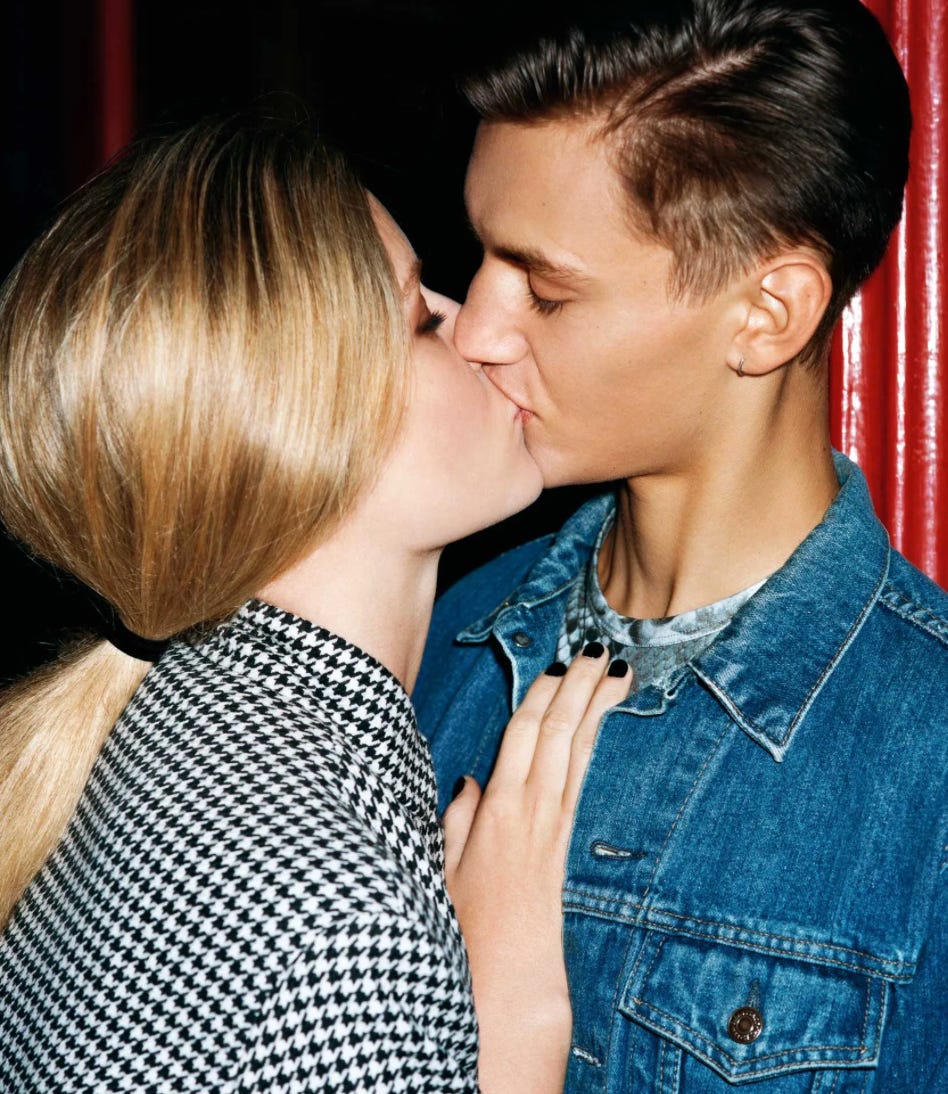
Three weeks on from Chanté Joseph’s mega-viral article Is Having A Boyfriend Embarrassing Now?, Megan Nolan responds
After a breakup, I too have gone through the canon event of methodically archiving photos with old boyfriends. Not because I think badly of them, or wish to forget our time together (quite the opposite), but because it’s just no longer relevant. Nolan’s article gave me pause: relevant to whom? People who follow me? Truly who cares?
Nolan objects to Joseph’s article on the basis that not posting your boyfriend is a manifestation of personal curation.
“There’s nothing I hate more than a personal Instagram full of chilly meaningless abstraction or one of those interchangeable quiet luxury accounts, all big black candles that cost 400 quid and a single peach on a plate – total aesthetic numbness. Both of these in their different ways are saying: I am nothing so tawdry as a human being, instead I am this nerveless series of signifiers who cannot be understood or harmed.”
Nolan says so what if that guy breaks your heart?
“Why would I care about how strangers perceive my relationship when I am in the middle of being devastated by its ending? Is it really necessary that all of us, not just professional influencers, treat the representation of our lives this way, as something to be mediated so that we appear more coherent to an audience?”
Throughout the ongoing debate, it hadn’t occurred to me until Nolan pointed out that any embarrassment associated with having a boyfriend is inextricable from the overall humiliation of human co-dependence.
Celestial Light - Cecile Pin - 4th Estate
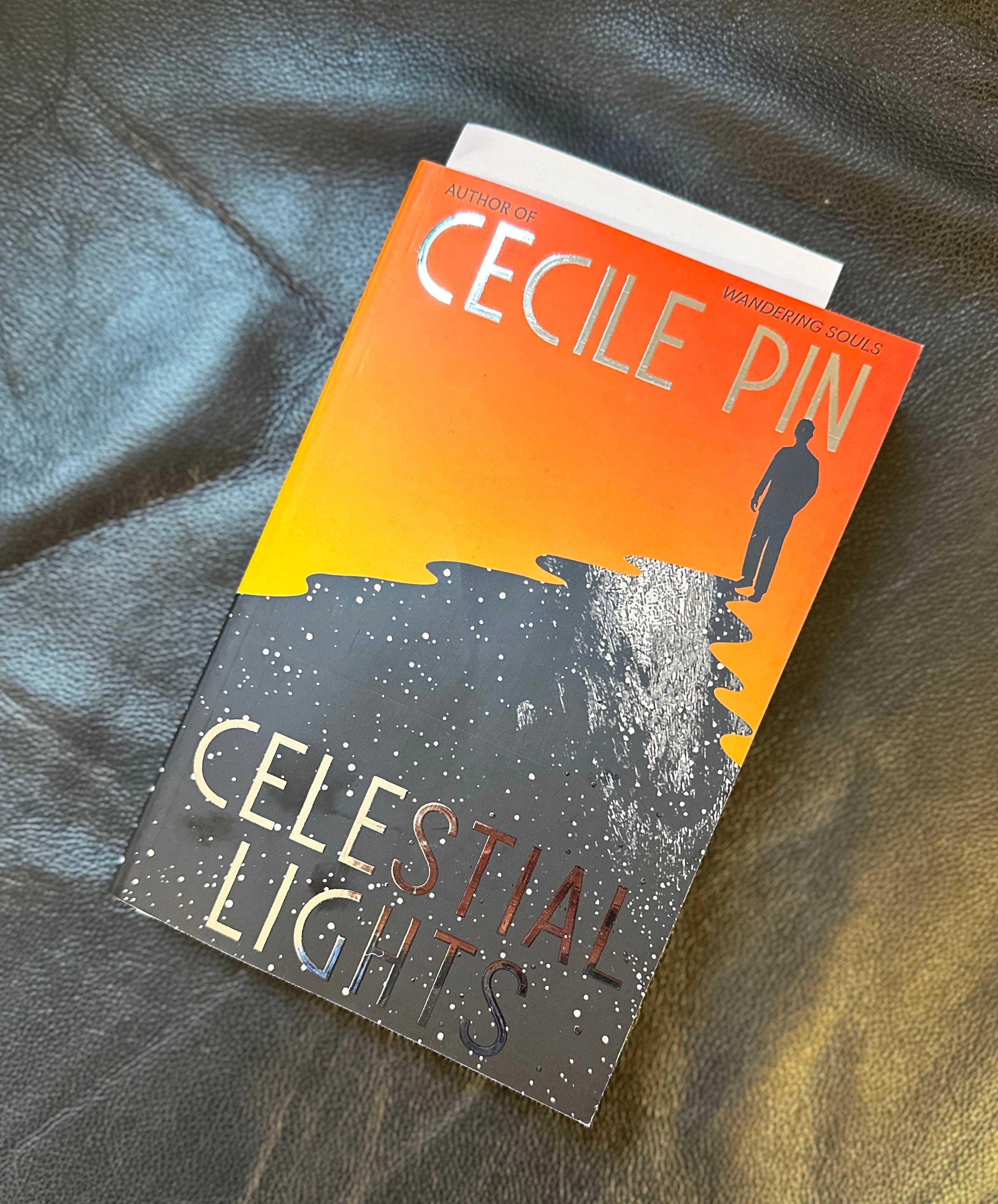
I haven’t been reading much since I starting drafting book 3, but I couldn’t hold off reading this (gorgeous) proof of Cecile Pin’s second novel, Celestial Lights.
It tells the story of Oliver Ines, the leader of a decade-long explorative space mission, weaving between his personal log from the mission, and reflections on his childhood and formative relationships.
The result of Pin’s sparing prose is deeply atmospheric; who knew scenes of children searching for cicadas could be so moving?
It’s a novel about the pursuit of renown, ambition, and sacrifice. I particularly loved how distinctive yet cohesive Oliver’s voice is throughout different stages of his life, from boyhood, to university and early adulthood, charting wonderfully how forking paths change us.
The impulsiveness of Mary Queen of Scots
I’m a huge fan of the brilliant podcast The Rest is History hosted by Tom Holland and Dominic Sandbrook. Last week, I binged the six-part series on Mary Queen of Scots, and have promptly moved onto the series on her cousin, Elizabeth I.
The series on Mary Queen of Scots is pure enjoyment, covering her life as it intertwined with her Tudor kin, and independent from them too. I particularly enjoy how major historical characters are brought to life, charting their political moves within the framework of their emotional and mental state. Compared to Elizabeth’s practised indecisiveness, Mary shows a sort of impulsiveness when it comes to her relationships that we can all relate to.
Other episodes of the podcast I love is the six-part series on the Titanic, and the episode on Emma Hamilton, Nelson’s long-term mistress.
That’s all for today. If you enjoyed this article, catch up on my others:


One more thing! My accountant would love it if you pre-ordered my novel…